

Learning, Brought to Life
Great learning starts with more than content. It starts with understanding the people, the problem, and the experience that will make the learning stick.
The case studies below highlight selected projects delivered by members of the HumanKind Learning team in previous roles. Client and program identifiers have been removed, but the challenges, creative approaches, delivery methods, and results are real.
From animated mystery adventures to immersive theme parks to sensitive, survivor-informed storytelling, each project started with the same question:
What experience will help this learner understand, remember, and act?
Case Study 1 : Adversarial Foreign Investment
Project Snapshot
Development: Approximately 11 months
Course Length: Approximately 8 hours seat time
Core Team: Multidisciplinary learning and media team
Delivery: Custom HTML5 / SCORM learning experience
Accessibility: Section 508 / WCAG-aligned development
Recognition: Multiple national industry awards
Experience That Built HumanKind
This project was completed by HumanKind Learning team members in prior professional roles, before HumanKind Learning was formed. It is presented here to demonstrate the experience, responsibilities, and capabilities those team members now bring to HumanKind Learning.
The Challenge
Adversarial foreign investment is complex by nature.
Learners needed to understand policy, recognize subtle indicators of risk, connect seemingly unrelated pieces of information, and make decisions in situations where the right answer was not always immediately obvious.
A traditional course could explain the rules.
But the work itself required something different: observation, judgment, curiosity, and the ability to recognize when ordinary information starts to form a larger pattern.
So rather than building a course about an investigation, the team decided to put the learner inside one.


The HumanKind Team Members Approach
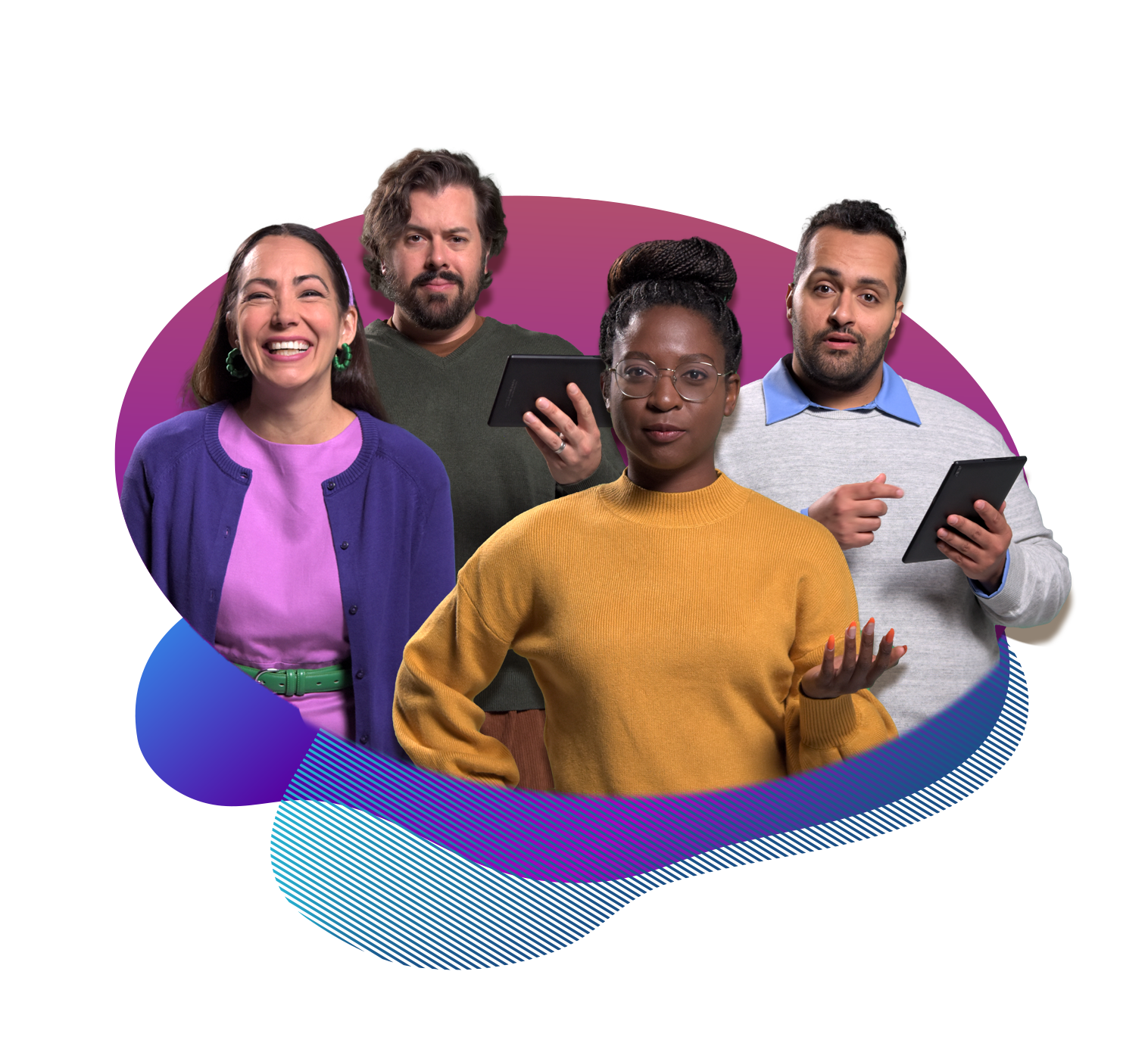
The creative concept was built as a playful spoof of a classic Saturday-morning mystery cartoon.
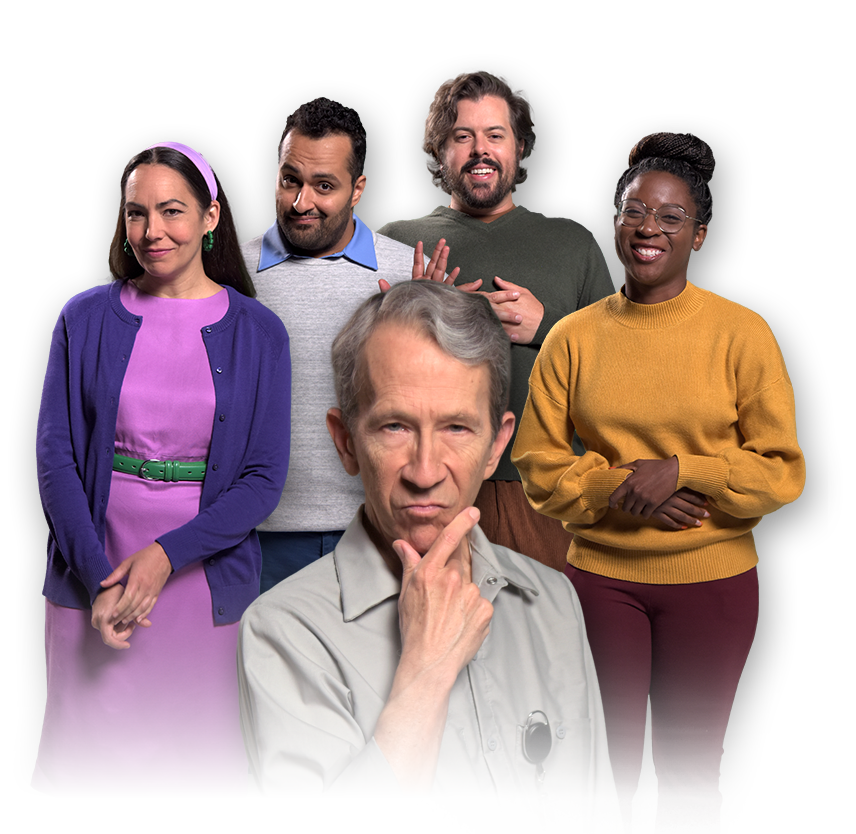
The course began in live action with a group of recurring characters whose wardrobe, personalities, and team dynamics deliberately echoed the familiar archetypes of the confident leader, the stylish problem-solver, the analytical investigator, and the laid-back comic relief.
Then the experience shifted.
The live-action cast was transformed into illustrated cartoon versions of themselves, and the course became an animated mystery-adventure built around uncovering suspicious activity, following clues, interviewing characters, and connecting information that did not initially appear related.
That tonal shift was intentional.
The subject matter was serious, but the storytelling framework gave learners an immediately understandable role: something is not right, and your job is to help figure out why!
Instead of moving through conventional lessons, learners followed the group as the investigation unfolded. Meetings, documents, messages, video, workplace systems, and conversations became pieces of the mystery. Details encountered early in the course could take on new meaning later as additional information was revealed.
The cartoon treatment also gave the team greater freedom to move between locations, exaggerate visual moments, introduce humor, and create a cohesive story world without losing the authenticity of the original actors’ performances.

Building the Story World
The production combined live-action performance with custom illustration, animation, environmental design, and digital compositing.
Each performer was translated into a stylized animated character while retaining recognizable wardrobe, appearance, and personality cues from the live-action introduction. The visual ensemble intentionally referenced the familiar dynamics of a classic mystery-solving cartoon team, giving learners an immediate sense of how the characters related to one another.
From there, the experience used the conventions of a mystery adventure to support the instruction:
- Suspicious details became learning cues.
- Documents and communications became evidence.
- Policy indicators became clues.
- Stakeholder conversations revealed conflicting information.
- Learner decisions helped move the investigation forward.
- New discoveries forced learners to reconsider what they thought they already understood.
The humor and visual style made the experience approachable, but the mystery structure did the real instructional work.
It gave learners a reason to pay attention to details.
It made seemingly disconnected information feel connected.
And it placed the learner inside the kind of analytical thinking the course was designed to develop.

What We Built
The resulting learning experience combined:
- A continuing mystery-driven narrative
- A recurring protagonist and supporting cast
- Live-action scripted performances
- Custom illustrated environments
- Live-action-to-animation character transformations
- Integrated animated and cinematic visual treatments
- Simulated email, messaging, tablet, and workplace interfaces
- Documents, communications, and visual details that functioned as instructional clues
- Scenario-based decisions tied directly to the unfolding story
- Interactive investigation and knowledge-application activities
- Custom UX/UI designed around the narrative experience
- Animation, motion graphics, and cinematic transitions
- Accessible interaction patterns and media alternatives
- Standards-based SCORM delivery for the client’s LMS
Rather than stopping the story to test what learners remembered, interactions became part of how the story progressed.

How We Delivered It
The project was developed over approximately 11 months by a multidisciplinary team. Members of the HumanKind Learning team provided creative direction, UX/UI design, visual development, multimedia production, and learning-development support for the program.
The core production structure included:
- Project management
- Instructional design
- Dedicated live-action scriptwriting
- Creative direction
- Visual designers
- Technical development
- Deployment
The narrative approach required unusually close collaboration.
The instructional designer ensured that every discovery and decision supported the learning objectives. The scriptwriter translated those requirements into believable conversations and character moments. Creative direction connected story, visual design, interface, animation, and live-action production into a cohesive experience.
Development and visual production happened alongside instructional design rather than waiting for it to finish.
Project management coordinated stakeholder reviews, content approvals, scripting, media production, accessibility, quality assurance, technical development, and final LMS delivery across an iterative production cycle.
Accessibility was incorporated throughout the process rather than treated as an end-of-project remediation activity.
The Result
The completed course transformed a dense policy topic into a story learners could follow, question, investigate, and ultimately help resolve.
Learner evaluations placed it among the client’s highest-rated learning experiences.The program, on which HumanKind team members led creative and learning-experience development, received multiple national industry awards recognizing both its instructional video and digital learning design.
The storytelling was memorable, but it was never storytelling for its own sake.
The mystery gave learners a reason to pay attention.
The characters gave the information context.
And the investigation gave learners a chance to practice the kind of judgment the real work required.